
Asphalt Sealcoat in Midland & Odessa, TX
A protective coat that blocks sun, water, and oil — the least expensive way to stretch the life of a driveway or parking lot. Free estimates across the Permian Basin.
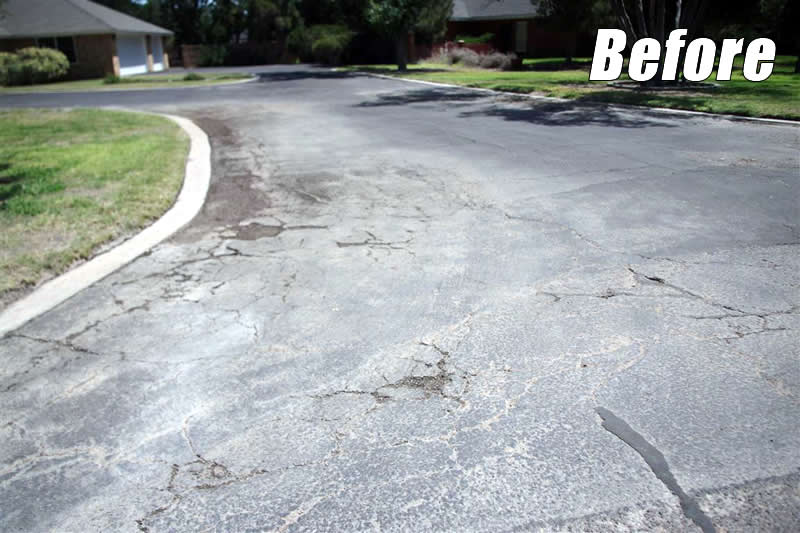
The West Texas sun is what kills asphalt. It dries the binder out of the surface until the black turns gray, the surface goes brittle, and cracks open up. Sealcoat blocks that — a thin protective layer that keeps sun, water, and oil from getting at the pavement underneath.
We sealcoat residential driveways and commercial parking lots across Odessa and Midland. Cracks get filled first, oil spots get primed, and the sealcoat goes down clean — for a fraction of what repaving costs.
How Sealcoating Works
- 1
Clean
Power blowers and brooms clear dirt, sand, and debris. Sealer only bonds to a clean surface.
- 2
Repair
Cracks filled and oil spots primed, so problems don't keep growing under the new coat.
- 3
Seal
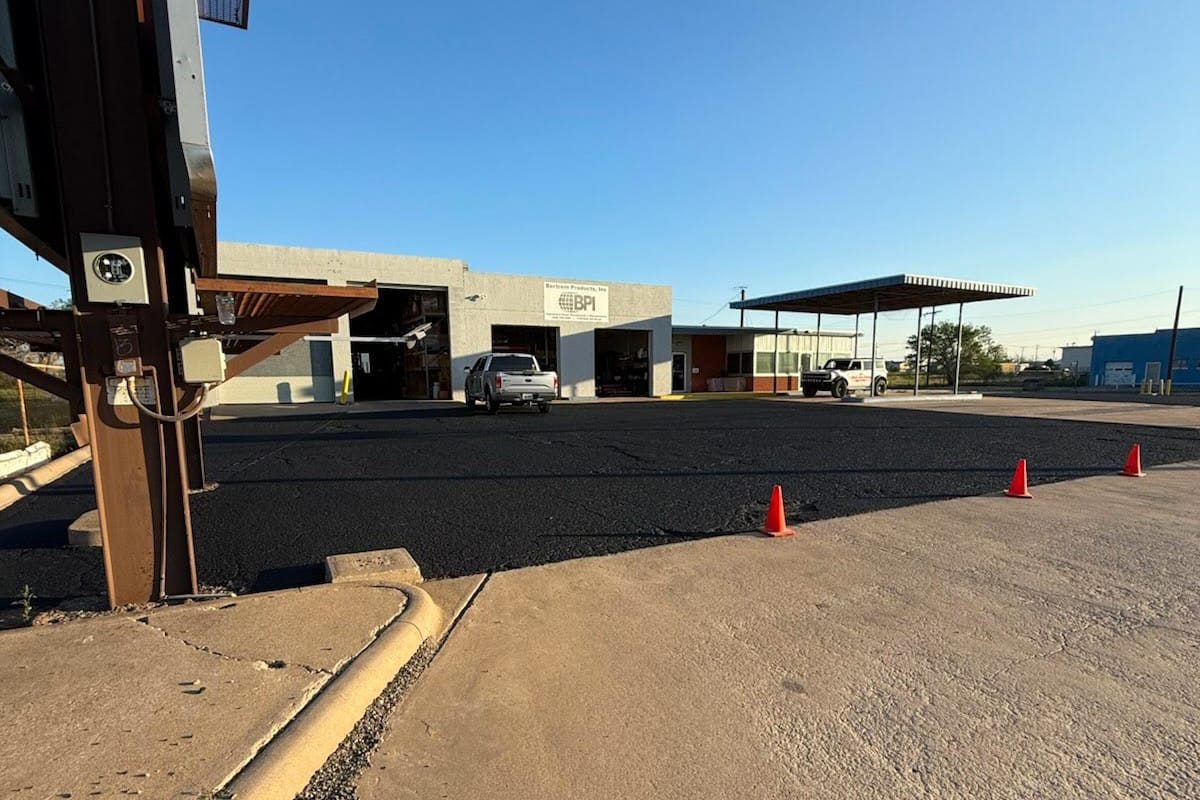
Coal-tar or asphalt-based sealant, edged in by hand and applied in one or two coats.
- 4
Cure
Give it 24 to 48 hours, and the surface comes back deep black, sealed, and protected.
What Sealcoating Protects Against
Sun & UV damage
The number-one cause of early asphalt aging under the West Texas sun.
Water intrusion
A sealed surface sheds rain instead of letting it into the cracks where it does structural damage.
Oil & chemical stains
Vehicle fluids soften bare asphalt. A sealed surface shrugs them off.
Surface wear & fading
Blowing sand works like sandpaper out here. Sealcoat takes the abuse so the pavement doesn't.
Sealcoat for Driveways & Parking Lots
Driveways
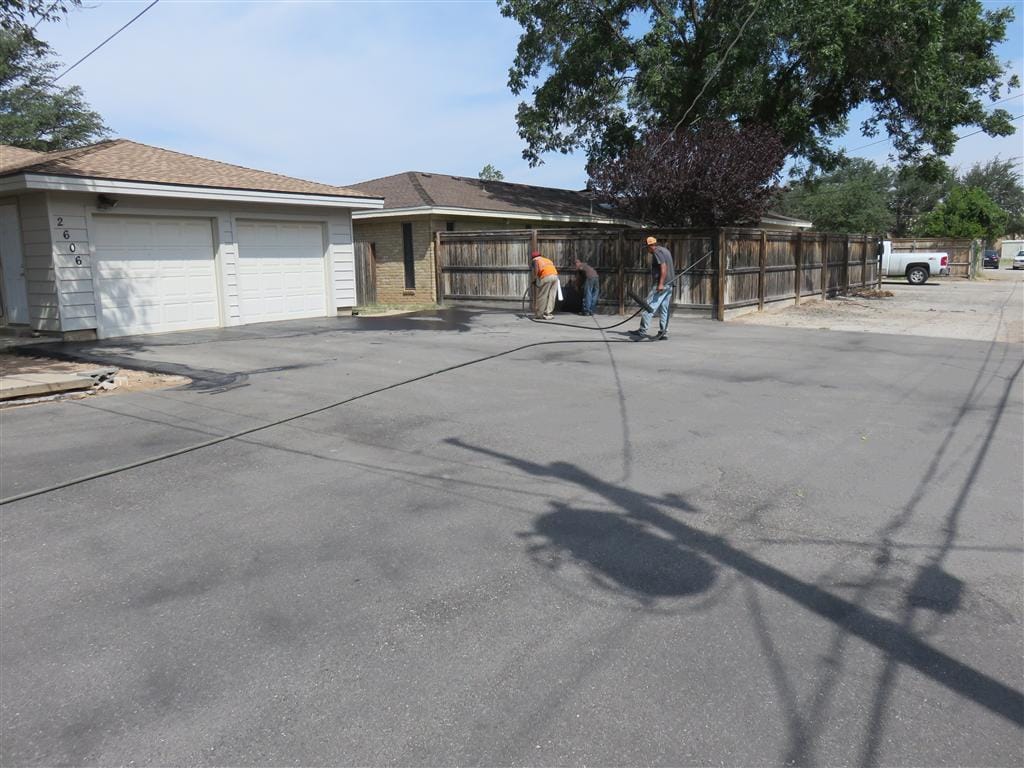
A sealed driveway looks freshly paved and sheds water instead of drinking it. Most homes are done in a day, and the curb appeal is immediate.
Parking lots
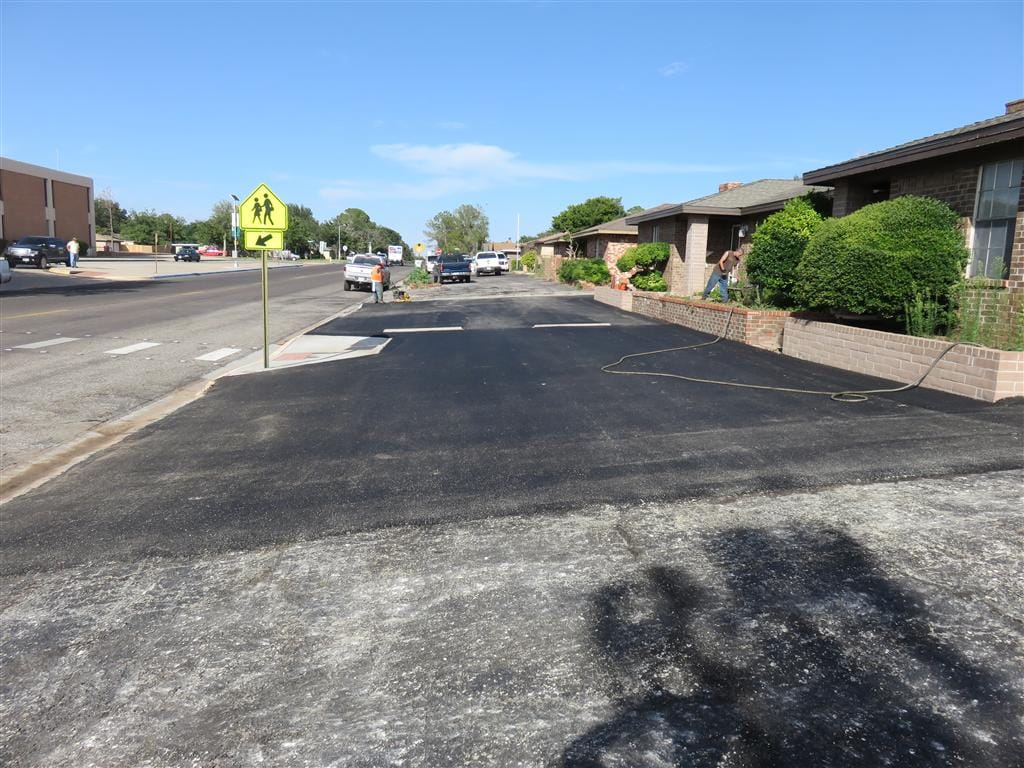
We seal commercial lots in phases so you stay open, then lay fresh striping on the cured surface. The lot comes back looking new.
The Best Time to Sealcoat in West Texas
New asphalt
Let fresh pavement cure a few months before its first seal. After that, it's on the cycle.
The cycle
A sealcoat every two to three years keeps the surface protected — and can carry good asphalt past 20 years instead of 12 to 15.
The season
Sealer cures best in warm, dry weather. West Texas gives us a long window, spring through fall.
One rule: sealcoat is protection, not a structural fix. Open cracks get filled first — sealing over them just hides a problem that keeps growing.
Get a Sealcoat Price
We sealcoat driveways and lots across Odessa, Midland, and the surrounding towns — and if your pavement needs crack filling or repair first, that goes in the same written quote.
- Free on-site estimate — we measure, you decide
- Crack filling included in the quote where it's needed
- Driveways and multi-acre lots alike
Or call (432) 878-8059 — answered 8am to 8pm, every day.
Request your free estimate
Send your name and number and we'll call you back to set a time.
Sealcoating FAQs
How much does sealcoating cost in Odessa or Midland, TX?
It depends on the square footage and the condition of the asphalt. A small residential driveway and a multi-acre commercial parking lot are very different jobs. Crack filling, oil-spot priming, and the number of coats all factor in too. We give a free written estimate after measuring the surface, and the itemized price we quote is the price you pay. There's no charge to have us look at your driveway or parking lot.
When is the best time to sealcoat in West Texas?
Sealcoat cures best in warm, dry weather, so spring through fall is prime sealcoating season across Odessa, Midland, and the Permian Basin. We watch for a dry stretch with mild overnight temperatures so the asphalt sealer bonds to the pavement and cures properly. Sealcoating is weather-permitting work. We'd rather wait a day for the right conditions than rush a coat that won't last.
How often should I sealcoat my asphalt driveway or parking lot?
Every 2-3 years is typical for most driveways and parking lots. The relentless West Texas sun and UV rays break down the asphalt binder faster than milder climates, so a regular seal coating cycle is the cheapest preventative maintenance there is. It protects your pavement and extends the life of your asphalt for a fraction of the cost of repaving.
What is the difference between coal-tar and asphalt-based sealer?
Both protect the surface; they're just different sealant chemistries. Coal-tar emulsion resists oil, fuel, and UV aggressively and is a traditional choice for commercial parking lots. Asphalt-based sealer is a lower-odor option that still locks out water and sun. We'll recommend the sealer that fits your surface, your traffic, and your site conditions.
Does sealcoating fix cracks and potholes?
No. It protects the surface but isn't a structural repair. We fill cracks and patch potholes first, clean the surface, then apply sealcoat over a sound surface so the protection actually lasts. Sealing over open cracks just buries a problem that keeps growing underneath.
How long before I can use the freshly sealcoated surface?
Most surfaces are ready for foot traffic in a few hours and vehicle traffic in 24-48 hours, depending on the temperature and humidity that day. For a commercial parking lot we usually seal in sections or after hours so you keep operating, then add fresh line striping once the surface has cured.
The Cheapest Years You'll Ever Add to Your Pavement
Free sealcoat estimates for driveways and lots across Midland & Odessa.